Camo Dad Tumbler Wrap: A Designer's Real-World Review
As a designer who spends more time staring at stitch maps and fabric swatches than most people care to admit, I approach every new digital embroidery file with a mix of curiosity and skepticism. When I first encountered the Camo Dad 20oz Tumbler Wrap Sublimation, my initial reaction was one of pause. This is explicitly marketed as a sublimation graphic for Tumbler Wraps, yet my brain immediately started translating those pixels into threads. It is a fascinating exercise to take a high-resolution PNG intended for heat transfer and mentally deconstruct it for a machine embroidery design workflow. While this product is not an embroidery file out of the box, understanding its visual language offers incredible insight for anyone looking to create coordinated handmade products or expand their craft business offerings.
Visual Personality and Mood
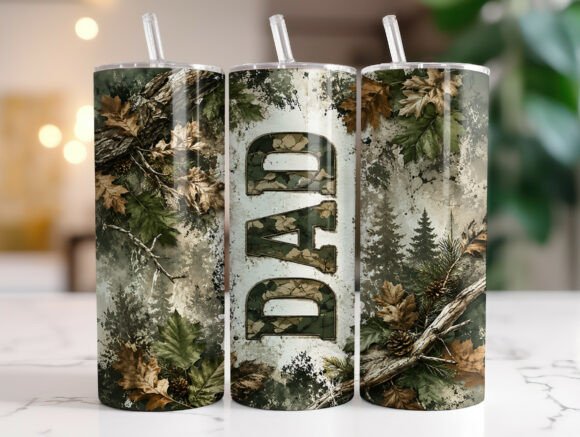
The first thing that strikes you about the Camo Dad 20oz Tumbler Wrap Sublimation is its rugged, utilitarian aesthetic. The camouflage pattern isn't just a background; it sets a specific tone. It speaks to outdoor enthusiasts, fathers who appreciate practicality, and the current trend of "tactical chic" in custom apparel. The layout, sized at 9.3″ x 8.2″, provides a substantial canvas. In the world of sublimation, this allows for a full wrap around a skinny tumbler. However, for an embroiderer, this scale suggests a large-scale embroidered patch or a bold back-yoke design on a heavy canvas tote. The mood is masculine but approachable, perfect for Father's Day, hunting season gifts, or boutique items targeting a demographic that values durability over delicacy.
If I were to translate this Graphics asset into thread, the challenge would lie in replicating the organic, blended nature of the camo without turning it into a muddy mess of fill stitch work. The visual personality here is key: it needs to look worn-in and authentic, not overly polished. This makes it an excellent candidate for textured fabrics where the thread can sit slightly higher, mimicking the depth found in the original high-resolution PNG.
Real-World Application Scenarios
Let's move beyond theory and talk about a real project. Imagine a client comes to your small shop requesting a matching set for a new dad: a personalized tumbler and a diaper bag or a rugged tote bag design. You purchase the Camo Dad 20oz Tumbler Wrap Sublimation for the cup. Now, how do you elevate the textile component? You wouldn't just slap a generic logo on it. Instead, you use the camo motif from the wrap as inspiration for a custom sweatshirt embroidery or an applique design on the bag.
In this scenario, the camo pattern serves as the unifying theme. For the textile item, you might digitize a simplified version of the camo shapes using varying shades of green and brown thread. The result is a cohesive brand experience for the customer. The tumbler gets the detailed, photo-realistic print from the sublimation file, while the bag gets the tactile richness of embroidery. This dual approach increases the perceived value of the finished product significantly. It shows attention to detail that Etsy sellers and boutique owners know drives higher price points and customer loyalty.
Furthermore, consider holiday embroidery projects. A camo-themed stocking or a pillow cover for a cabin-style living room could utilize the color palette found in this wrap. The design assets provided here act as a mood board, guiding your thread selection and stitch choices even if you aren't stitching the exact image.
Technical Considerations for Embroiderers
While the Camo Dad 20oz Tumbler Wrap Sublimation is a print file, adapting its style for embroidery requires careful technical planning. If you decide to recreate this look with thread, you must be wary of stitch density. Camouflage relies on irregular shapes and color blending. In embroidery, trying to replicate every nuance with satin stitch or dense fill can lead to puckering, especially on stretchy fabrics.
For a project like a cap or a structured hat, you would need to simplify the design drastically. Curved surfaces demand fewer stitches and larger shapes to maintain clarity. Tiny details that look crisp in a 300 DPI PNG will vanish or become bird nests under a needle. If you are working on a baby embroidery item, such as a onesie, the fabric texture is too delicate for heavy camo fills. In these cases, using the camo concept as an applique design—cutting camo fabric and stitching around it with a clean running stitch or satin border—is far superior to trying to stitch the pattern directly.
Another critical factor is the hoop size. The original graphic is nearly 10 inches wide. Most home machines cannot hoop this area in one go. You would need to plan for multi-hoop stitching or scale the design down significantly, which risks losing the impact of the pattern. Always test your digitized version on scrap fabric first. Check how the thread colors interact under different lighting conditions. What looks like a perfect forest green on screen might look neon or dull once stitched, affecting the overall realism.
Enhancing Product Value and Brand Consistency
Using a strong visual anchor like the Camo Dad 20oz Tumbler Wrap Sublimation across different mediums strengthens your brand identity. When customers see the same aesthetic on a tumbler, a tee, and a patch, it creates a sense of professionalism. It tells them you are not just selling random items; you are curating a lifestyle. This consistency builds trust, which is the currency of any successful small shop product line.
For commercial embroidery projects, clarity is king. If you are creating printable mockups to sell digital previews or marketing materials, having the high-res sublimation file allows you to show clients exactly what the final vibe will be before a single stitch is made. It helps manage expectations regarding color and scale. However, remember that embroidery adds a physical dimension that print cannot. Use this to your advantage by highlighting the texture of the thread in your marketing photos alongside the smooth finish of the sublimated tumbler.
Practical Designer Notes and Final Verdict
Before diving into a project inspired by this wrap, keep these practical tips in mind. First, always confirm licensing terms. Just because you bought the sublimation file does not automatically grant rights to reproduce the design in thread for commercial sale unless specified. Second, pay attention to contrast. Camo can sometimes lack definition. When translating to embroidery, ensure there is enough contrast between your thread colors so the design doesn't look like a blur from three feet away.
Test your design on both light and dark backgrounds. A camo pattern might disappear on a black hoodie but pop on a khaki canvas. Use the appropriate stabilizer for your fabric choice; heavy designs need tear-away or cut-away stabilizers to prevent sagging over time, especially for items like kitchen towels or aprons that undergo frequent washing. Finally, consider the end-user. Is this a decorative piece or a functional item? For high-wear items, keep the stitching simple and robust.
In conclusion, the Camo Dad 20oz Tumbler Wrap Sublimation is more than just a file for a cup. It is a versatile design asset that, when understood deeply, can inspire a wide range of personalized gifts and custom apparel. By treating it as a thematic guide rather than a direct stitch map, designers can create unique, high-value handmade products that resonate with customers. Whether you are an Etsy seller looking to expand your catalog or a hobbyist making a gift for a father who loves the outdoors, this graphic offers a solid foundation for creativity. Just remember to respect the limitations of the needle and thread, and let the rugged charm of the camo shine through in your own unique way.