Hot Pink Leopard Glitter Tumbler Wrap: A Designer's Take
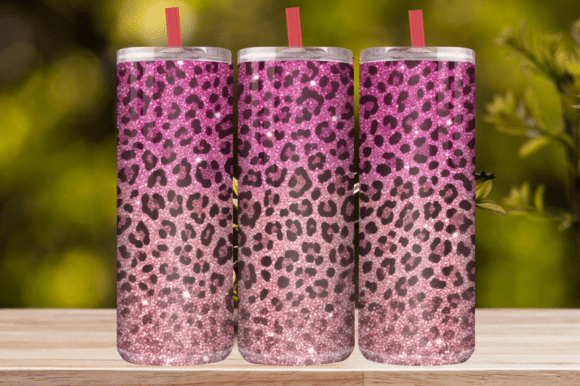
When I first pulled up the Hot Pink Leopard Glitter Tumbler Wrap on my screen, my initial reaction wasn't to think about tumblers. As an embroidery designer who spends most of my day thinking in threads, stabilizers, and hoop sizes, my brain immediately started translating this graphic into a machine embroidery design. The file itself is listed as a high-resolution PNG, sublimation-ready, sized at 9.3″ x 8.2″ with 300 DPI. While these specs are perfect for printing on cylindrical surfaces, adapting this kind of bold, glitter-effect graphic for stitching requires a different kind of scrutiny. I wanted to see if this visual personality could survive the transition from digital pixels to physical thread without losing its spark.
Translating Digital Glitter into Stitched Texture
The mood of this design is unapologetically bold. It screams "boutique energy." The hot pink base combined with the leopard spots creates a high-contrast look that demands attention. In the world of Tumbler Wraps and Graphics, this is a best-seller because it mimics the trendy glitter vinyl look. However, for us stitchers, "glitter" in a PNG doesn't automatically mean we can replicate it with metallic thread alone.
If I were to digitize this or use it as a reference for a custom embroidery project, the first thing I'd consider is how to achieve that shimmer. A standard fill stitch in hot pink might look flat compared to the source image. To get close to the original vibe, I'd likely recommend a combination of techniques. Perhaps a dense satin stitch border around the spots to define them, filled with a variegated thread that shifts between deep magenta and bright neon. Alternatively, for a true "glitter" effect on fabric, one might consider an applique design approach, using actual glitter fabric cut to shape and secured with a tight satin stitch edge. This adds texture and dimension that a simple print cannot match.
Real-World Application: The Boutique Sweatshirt Scenario
Let's walk through a real-life scenario. Imagine a client comes to your craft business wanting a personalized gift for a friend who loves bold patterns. They show you the Hot Pink Leopard Glitter Tumbler Wrap and ask, "Can you put this on a sweatshirt?" This is where practical design judgment kicks in.
The layout of this graphic is roughly square, which works well for the chest area of a hoodie or the back of a denim jacket. However, the level of detail in those leopard spots is crucial. If you attempt to stitch this directly onto a textured fleece sweatshirt without proper stabilization, the small details of the spots could get lost in the fabric pile. The stitch density would need to be high enough to cover the fabric completely but not so high that it causes puckering or makes the garment stiff and uncomfortable to wear.
For a project like this, I would advise using a heavy-duty cut-away stabilizer. Since the design covers a significant area (nearly 9 inches wide), the weight of the stitching could distort a stretchy garment if not supported properly. The result, if done right, would be a stunning piece of custom apparel that feels premium. The customer isn't just buying a shirt; they are buying a statement piece that mirrors the trendy aesthetic they saw on social media, but with the durability and tactile quality of embroidery.
Navigating Fabric Choices and Hoop Limitations
One of the biggest challenges with adapting a large graphic like the Hot Pink Leopard Glitter Tumbler Wrap is the physical limitation of your machine. Most home embroidery machines have a maximum hoop size of 5x7 inches or perhaps 6x10 inches. This design is 9.3 inches wide. To use this effectively, you would either need to scale it down significantly, potentially losing the definition of the smaller spots, or utilize a "hoop-and-rehoop" technique if your software supports splitting large designs.
Scaling down brings us to the issue of thread colors. In the original graphic, the transition between the pink and the spots is sharp. In embroidery, if you shrink this too much, those distinct lines might blur together, especially if you are working with dark fabric where the background needs to be covered first. Speaking of dark fabric, this design relies heavily on the vibrancy of the pink. On a black tee, it would pop beautifully, provided you use an underlay stitch to prevent the dark fabric from peeking through the lighter threads. Conversely, on a white tote bag, you might need to fill the entire background area, which increases the stitch count and production time.
Curved surfaces present another hurdle. While this file is intended for flat sublimation wraps, if you try to adapt this for a cap, the curvature of the front panel will distort the circular nature of the leopard spots. Unless you are an experienced digitizer who can compensate for pull and distortion, this specific layout is better suited for flat items like tote bag designs, pillow covers, or aprons.
Value Perception and Brand Consistency
Why go through the trouble of translating a sublimation graphic into embroidery? The answer lies in perceived value. An Etsy seller offering a "Hot Pink Leopard" item has two choices: print it or stitch it. The stitched version commands a higher price point. It signals to the buyer that this is a handmade product crafted with care, not just a mass-produced transfer.
For small shop owners, consistency is key. If your brand is built on high-quality, durable goods, embroidery offers longevity that prints often lack. A personalized gift featuring this design, when embroidered, becomes an heirloom rather than a disposable trend. It builds customer trust because the buyer knows the design won't crack or fade after a few washes. However, this only holds true if the execution is flawless. Poor tension, visible backing, or sloppy edges on the spots can ruin the illusion of luxury.
Practical Notes for the Maker
Before you commit to selling this as a small shop product or using it for a major holiday embroidery run, here are my professional recommendations:
- Test on Scraps First: Never stitch a design of this magnitude on your final garment without a trial run. Check how the fabric texture interacts with the stitch direction.
- Check Licensing: Remember, the source file is a graphic. Ensure you have the rights to adapt it into a derivative work for commercial sale if you plan to sell the finished embroidered items.
- Mockup in Black and White: Convert the image to grayscale on your computer. This helps you see the contrast levels clearly. If the spots disappear in black and white, they might get lost in the stitching too.
- Consider Thread Sheen: To mimic the "glitter" aspect, experiment with rayon threads which have a natural sheen, or mix in a few strands of metallic thread for highlighting specific spots.
- Wash Testing: If you create a baby embroidery item or something meant for frequent washing, ensure your stitch density and stabilizer choice can withstand agitation without fraying.
In conclusion, while the Hot Pink Leopard Glitter Tumbler Wrap is technically a graphic file intended for sublimation, its visual impact makes it a fantastic inspiration for embroidery projects. With the right adjustments to stitch density, careful selection of materials, and a keen eye for detail, this design can transcend its original format. It offers a pathway for designers to create unique, high-value finished products that stand out in a crowded market. Whether you are making a custom apparel line or a one-off personalized gift, the key is respecting the medium. Don't just try to copy the pixel; reinterpret the spirit of the design through the art of the needle.