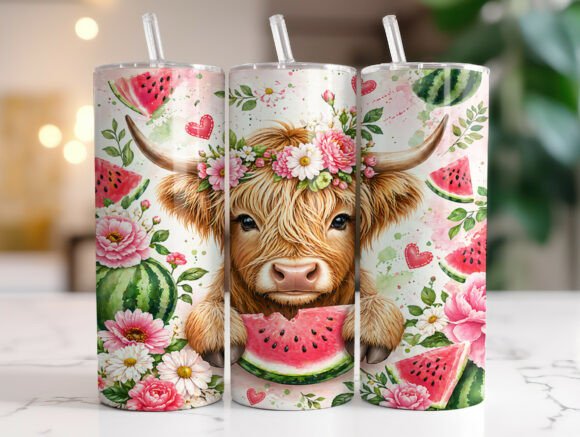
Review: Highland Cow Watermelon Floral Tumbler Design
As a designer who spends more time staring at stitch maps than most people spend on their phones, I approach every new digital embroidery file with a mix of curiosity and skepticism. We've all been there: you buy a design based on a glossy thumbnail, only to find out the stitch density is so high it turns your fabric into cardboard, or the details are too fine for anything but a poster. So, when I came across the Highland Cow Watermelon Floral Tumbler, I didn't just look at the preview; I started mentally mapping out how this graphic would translate from a screen to a needle and thread.
At first glance, the mood of this piece is undeniably summer meets rustic charm. The combination of a shaggy Highland cow with vibrant watermelon slices and soft florals creates a visual personality that is playful yet grounded. It's not just a random collection of clip art; there's a cohesive flow to the layout. For those of us running a craft business or selling on Etsy, understanding this "vibe" is crucial because it dictates exactly where this design belongs in your product lineup. This isn't a formal wedding monogram; it's a breezy, fun asset perfect for boutique branding and seasonal collections.
Visualizing the Stitch-Out Reality
The product description notes that this is a high-resolution PNG set, specifically sized at 9.3″ x 8.2″, which is perfect for 20oz skinny tumblers. However, as an embroiderer, my brain immediately starts converting those inches into hoop sizes and stitch types. If you are planning to use this as a machine embroidery design rather than a sublimation wrap, you have to think about how those smooth digital gradients will break down into satin stitch, fill stitch, or running stitch.
Imagine preparing a custom order for a client who wants a unique personalized gift for a farmer's market vendor. You decide to put this design on a canvas tote bag design. The floral elements would likely need careful digitizing to ensure the petals don't merge into a solid blob of thread. The Highland cow's fur texture is the star here; in a real embroidery project, this area offers a fantastic opportunity to play with long-and-short stitches or varied fill angles to mimic that shaggy look. If the digitizing is done right, the texture of the cow against the smooth, solid colors of the watermelon could create a stunning tactile contrast that elevates the finished product from a simple bag to a piece of art.
Where This Design Shines in Real Projects
I can see this graphic working beautifully across a wide range of custom apparel and home goods. For a small shop product line, consider applying this to a linen apron. The natural texture of linen pairs wonderfully with the rustic theme of the cow. Alternatively, think about sweatshirt embroidery for a fall collection. While watermelon screams summer, the cozy vibe of the Highland cow bridges the gap into early autumn, making it a versatile seller.
For Etsy sellers focusing on nursery decor, this could be adapted into a baby embroidery project. Placed on a muslin swaddle or a bib, the friendly face of the cow adds a whimsical touch. However, scale is everything. The original dimensions are quite large for a tumbler wrap, so shrinking it down for a baby item requires checking if the small floral details hold up. You might need to simplify the thread colors or reduce the complexity of the flower centers to prevent thread breaks on smaller hoops.
Another strong contender for this design is the embroidered patch. Patches are huge right now, and the defined shape of the cow and watermelon slices would cut cleanly. A patch allows you to use a dense satin border to frame the design, giving it a professional, merchandise-ready look that customers love to stick on backpacks or denim jackets.
Navigating Technical Challenges and Fabric Choices
Let's get practical about where you need to exercise caution. Just because a file is "high resolution" for printing doesn't mean it's ready to stitch without adjustment. If you are working with textured fabrics like pique polo shirts or thick terrycloth towels, the fine lines in the floral sections might get lost. In these cases, you might need to increase the pull compensation or switch to a heavier weight stabilizer to keep the design crisp.
Dark fabric presents another hurdle. The watermelon pink and light florals might vanish against a navy or black background unless your digitizer has included a proper underlay or if you plan to use an applique design technique. Speaking of applique, this graphic is a prime candidate for it. Using actual fabric scraps for the watermelon and cow could solve the color vibrancy issue on dark garments and add a lovely mixed-media feel to your handmade product.
Curved surfaces are also tricky. While the file is marketed for straight and tapered tumblers (likely for sublimation), if you attempt to embroider this directly onto a cap, the curvature of the front panel will distort the image. The 9.3-inch width is simply too wide for a standard cap front. For hats, you would need to isolate just the cow's face or a single watermelon slice, ensuring the hoop size matches the available stitching area.
Maximizing Value and Customer Trust
In the world of commercial embroidery, consistency is king. Your customers trust you to deliver a product that looks as good as the mockup. Using a well-thought-out design like the Highland Cow Watermelon Floral Tumbler helps maintain that trust. When the stitching is clean, the colors pop, and the theme resonates, it boosts the perceived value of your brand. It tells the buyer that you care about the details, from the choice of design to the quality of the stitch-out.
Furthermore, having versatile design assets like this allows you to create cohesive collections. You can offer matching sets—a tumbler (via sublimation using the PNG), a tote bag (via embroidery), and a tee (via heat transfer or direct stitch). This cross-product strategy increases average order value and makes your printable mockup portfolios look incredibly professional.
Final Designer Notes for Execution
Before you commit to a full production run, here is my advice for working with this specific graphic:
- Test on Scrap First: Always stitch out a sample on the exact fabric you intend to use. Check how the fabric texture interacts with the fill stitches.
- Check Color Contrast: View your test stitch-out in black and white. If the flowers disappear against the cow's fur in grayscale, you need to adjust your thread palette.
- Verify Licensing: Since this is sold as a graphic file (PNG), ensure you have the rights to convert it into an embroidery file for commercial sale if that is your intention. Many graphic licenses differ from embroidery licenses.
- Stabilizer Matters: For a design with this much detail, don't skimp on stabilizer. A cut-away might be better than tear-away for items that will be washed frequently, like holiday embroidery gifts or kitchen towels.
- Scale Appropriately: Remember the original size is nearly 10 inches wide. Don't try to force the whole thing into a 4x4 hoop without losing critical definition.
The Highland Cow Watermelon Floral Tumbler is a charming, versatile graphic that holds a lot of potential for creative entrepreneurs. Whether you are digitizing it yourself for a custom apparel line or using it as inspiration for a mixed-media project, its strength lies in its ability to evoke a warm, summery feeling. With the right technical approach and attention to material selection, this design can become a standout piece in your portfolio, delighting customers and adding a touch of whimsical rusticity to your handmade creations.