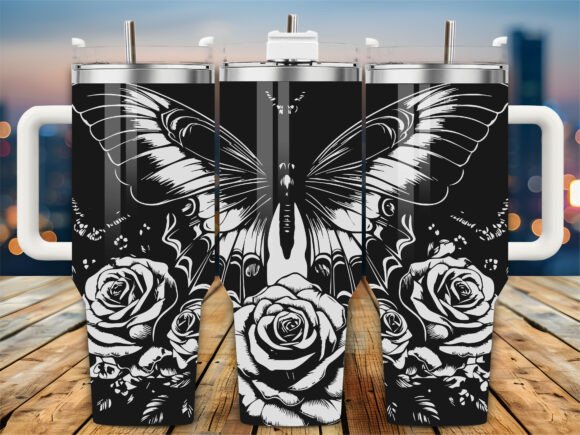
Review: Large Butterfly Rose 40oz Tumbler Design
As a designer who spends more time staring at stitch maps than most people spend on their phones, I approach every new digital embroidery file with a healthy dose of skepticism. We have all downloaded a "perfect" design only to find it turns into a bird's nest on the machine or looks pixelated once stitched out. So, when I pulled up the Large Butterfly Rose 40oz Tumbler graphic for evaluation, I wasn't just looking at pretty lines; I was mentally running a stress test on how this would translate from a screen to a tangible handmade product.
At first glance, the visual personality of this piece strikes a balance between whimsical and structured. The layout suggests a flow that is essential for wrapping around curved surfaces, which is exactly what you need for a 40oz tumbler project. However, since my expertise lies primarily in thread and fabric, I immediately started translating these laser-ready lines into an embroidery project mindset. Could this work as a large back patch on a denim jacket? Would it hold up as a central motif on a heavy cotton tote? The answer lies in the details.
Translating Laser Lines to Stitch Reality
The description promises "clean engraving lines," which in the world of embroidery usually translates to well-defined running stitches or crisp satin columns. When evaluating a design like the Large Butterfly Rose 40oz Tumbler, the first thing I check is the potential for stitch density. If the original graphic relies on heavy shading to create depth, converting this to thread could result in a stiff, cardboard-like finish if not managed correctly.
In a real-world scenario, imagine you are preparing a custom order for a boutique client who wants a matching set: a tumbler and a canvas tote bag. You use the laser file for the cup and decide to adapt this same aesthetic for the bag using an applique design technique. The butterfly and rose elements are distinct enough that they could easily be separated or layered. For the tote, I would recommend using a satin stitch for the outlines of the butterfly wings to give them a sleek, premium look, while utilizing a lighter fill stitch for the rose petals to prevent the fabric from puckering.
The mood of the design is romantic yet bold. It feels right at home on custom apparel like oversized sweatshirts or even as a statement piece on a nursery blanket. The scale implied by "Large" in the title suggests it commands attention, making it less suitable for tiny accents on baby caps but perfect for sweatshirt embroidery where you have ample real estate to let the design breathe.
Practical Application for Small Business Owners
For the Etsy seller or craft business owner, versatility is king. You need assets that can pivot between seasons and product types. This graphic shines as a multi-use asset. While it is marketed for tumblers, the underlying composition works beautifully for holiday embroidery gifts—think of a spring-themed pillow cover or a personalized apron for a gardening enthusiast.
When considering commercial embroidery projects, brand consistency is vital. If you are selling a line of nature-inspired goods, the Large Butterfly Rose 40oz Tumbler fits seamlessly into a collection that includes floral patches and botanical prints. The clean lines ensure that even when scaled down for a pocket logo or blown up for a back panel, the recognition factor remains high. Customers trust products that look professional, and a design with clear definition contributes directly to that perceived value.
However, we must talk about the limitations. Not every fabric plays nice with intricate designs. If you attempt to stitch this onto a textured towel or a stretchy performance fabric without proper preparation, those "clean lines" will distort. For textured fabrics like waffle weave or looped towels, a heavier stabilizer is non-negotiable. On stretchy fabric like jersey knits, you might need to adjust the pull compensation or switch to a knit-specific stabilizer to prevent the roses from looking warped after the first wash.
Technical Considerations Before You Stitch
Before committing to a full production run, there are several practical steps any experienced maker should take. First, always test the design on scrap fabric that matches your final material. This isn't just about checking the fit; it's about seeing how the thread interacts with the weave. Does the thread color contrast enough against a dark background? If you are stitching on black navy, a standard red might get lost, requiring a brighter scarlet or an outline to make the butterfly pop.
Another critical factor is the hoop size. Since this is a "Large" design, verify that your machine's maximum hoop can accommodate the full width without needing to split the file. Splitting files introduces alignment risks that can ruin the symmetry of the butterfly wings. If the design includes tiny details or simulated lettering within the petals, inspect those closely. Tiny elements often turn into blobs of thread if the stitch count is too high for the area.
It is also wise to view your mockups in black and white. This strips away the distraction of color and lets you focus purely on the stitch clarity and shape definition. If the design loses its form in grayscale, it might rely too heavily on color gradients that don't translate well to physical thread. Additionally, confirm the licensing terms. Just because a file is precision-made doesn't automatically grant you the right to sell it as a design asset or use it for unlimited commercial goods. Always read the fine print to protect your small shop product line.
Final Verdict on Visual Appeal and Usability
The Large Butterfly Rose 40oz Tumbler is a strong contender for makers looking to expand their catalog beyond basic monograms. Its strength lies in its adaptability. Whether you are creating a personalized gift for a wedding, designing a printable mockup for your online store, or producing a batch of embroidered patches for a local market, this graphic offers a solid foundation.
The key to success with this design is respecting the medium. What works for a laser engraver on metal needs thoughtful adaptation for needle and thread. By paying attention to stabilizer choices, thread weights, and fabric textures, you can elevate this from a simple digital file to a standout finished product. For the creative entrepreneur, it represents an opportunity to blend the precision of modern digital tools with the tactile warmth of traditional craftsmanship. Just remember to check the specific file formats and hoop requirements before you hit start, ensuring your embroidery file is as ready for the machine as the design is for the eye.