Wild Orchid Garden Tumbler: A Designer's Review
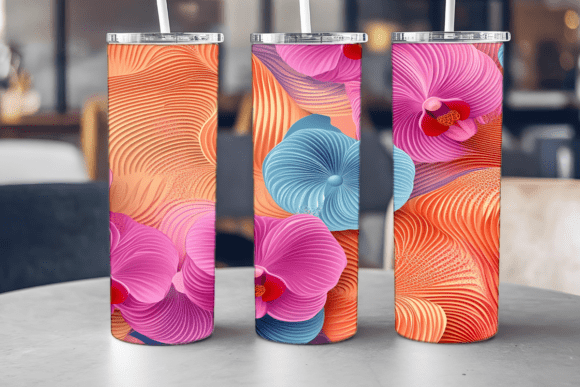
As a designer who spends more time staring at stitch maps than most people care to admit, I approach every new machine embroidery design with a mix of excitement and skepticism. We have all been there: you buy a beautiful graphic, convert it, or download a file, only to find that what looked stunning on the screen turns into a bird's nest of thread on the fabric. Today, I am taking a close look at the Wild Orchid Garden Tumbler. While the product listing categorizes this under Tumbler Wraps and describes it as a high-resolution PNG for sublimation, my interest lies in its potential translation into the world of physical stitching. Can a design born for 20oz skinny tumblers survive the rigors of an embroidery hoop? Let's dig into the practical reality of using this asset for real-world projects.
First Impressions and Visual Personality
When I first pulled up the Wild Orchid Garden Tumbler file, the immediate impression was one of organic elegance. The layout suggests a vertical flow, which makes perfect sense given its origin as a wrap for cylindrical objects. For an embroiderer, this verticality is a double-edged sword. On one hand, it offers a sophisticated silhouette that works beautifully on long, narrow canvases like apron bibs or the side panels of tote bags. On the other hand, the intricate details of orchid petals and garden foliage demand precision.
The mood created by this design is lush and boutique-ready. It feels less like a generic clipart image and more like a curated piece of art. If you are running a craft business or an Etsy seller looking to elevate your brand, this kind of visual personality is gold. However, before you commit to stitching this onto a client's heirloom quilt, you need to consider how those fine lines translate into thread. The original description notes it is a 300 DPI PNG, which implies rich detail. In embroidery terms, rich detail often means high stitch density or very fine running stitch work. This is where the designer's eye must be sharp.
Real-World Application Scenarios
Let's imagine a realistic scenario. You have a client who runs a small botanical shop and wants a set of branded custom apparel for her staff. She loves the Wild Orchid Garden Tumbler aesthetic. Instead of printing it, you decide to embroider it onto linen aprons. This is where the rubber meets the road. The design's natural home might be a tote bag design where the canvas is sturdy enough to support the weight of the threads without puckering.
Alternatively, consider the holiday season. A holiday embroidery project often requires speed and reliability. If you are creating personalized gifts like kitchen towels or pillow covers, this design could serve as a stunning focal point. However, because the source material is intended for smooth sublimation surfaces, you must be cautious about how it behaves on textured fabrics. A fluffy towel might swallow the finer details of the orchid garden, losing the definition that makes the graphic so appealing in its digital form.
For those interested in creating an embroidered patch, this design has excellent potential. Patches allow you to use a dense satin or fill stitch background to stabilize the intricate floral elements, ensuring the finished product holds up to washing and wear. This is a smart workaround for designs that might be too delicate for direct-to-garment application on stretchy materials.
Technical Considerations for Stitching
Here is the critical part of this review: the Wild Orchid Garden Tumbler is sold as a graphic file, not a pre-digitized embroidery file. This is a crucial distinction. If you are an apparel decorator, you cannot simply load this PNG into your machine. You will need to digitize it yourself or hire a professional digitizer to convert the image into a format your machine can read. This process involves deciding between satin stitch for the outlines, fill stitch for the petals, and running stitch for the delicate veins of the leaves.
If you choose to digitize this yourself, pay close attention to the hoop size. The vertical nature of the design might require a large hoop or a re-positioning strategy if you are working on smaller items like caps or baby clothes. Speaking of caps, curved surfaces are tricky. The tension required to stitch a detailed garden scene on a structured cap can lead to distortion if the stabilizer isn't chosen correctly. For a project like this, I would recommend a cut-away stabilizer rather than tear-away, especially if the fabric texture is loose or prone to stretching.
Another factor is color contrast. The original graphic likely relies on subtle gradients to show depth. In thread, we are limited to specific thread colors. You may need to simplify the color palette to ensure the design remains clear and readable from a distance. Test the design in black and white mockups first to see if the shapes hold their own without relying on color shading.
Commercial Viability and Brand Consistency
For digital product sellers and creative entrepreneurs, the licensing terms mentioned in the product description ("Commercial Use Welcome") are a green light for selling finished physical goods. This means you can confidently use the stitched version of Wild Orchid Garden Tumbler in your small shop product lineup. Whether it is for wedding gifts, nursery decor, or boutique branding, the exclusivity of a hand-embroidered version adds significant value compared to a mass-produced print.
However, buyer engagement depends on quality. If the stitching looks messy or the design puckers, it reflects poorly on your brand. Professionalism in commercial embroidery is about consistency. Before listing this as a printable mockup or a physical item, ensure that the digitized version maintains the integrity of the original art. Does the orchid look like an orchid, or does it look like a blob of green thread? These details determine customer trust and repeat business.
Practical Designer Notes
To ensure success with this project, keep these actionable tips in mind:
- Test on Scrap First: Never stitch a complex design like this directly on the final garment. Use a scrap piece of the same fabric to test tension and density.
- Check Licensing: While the description allows commercial use for finished items, verify if you are allowed to sell the digitized embroidery file itself. Usually, graphic licenses do not cover the resale of the converted stitch file.
- Stabilizer Selection: Given the likely detail level, use a high-quality stabilizer appropriate for the fabric weight. Dark fabrics may require a topping to prevent the fabric texture from showing through the stitches.
- Simplify Details: If digitizing, do not try to capture every single pixel. Focus on the overall shape and flow of the garden theme.
- Wash Testing: If the end product is something like a baby embroidery item or a tea towel that will be washed frequently, wash your test sample multiple times to check for thread breakage or fraying.
In conclusion, the Wild Orchid Garden Tumbler is a visually striking asset that holds immense promise for the right embroidery project. It is not a plug-and-play solution for machines, but rather a creative challenge for designers willing to put in the digitization work. When executed with care, proper stabilization, and thoughtful thread selection, it can transform a simple sweatshirt embroidery or tote bag into a high-end, handmade treasure. Just remember, the beauty is in the execution, so take your time, test thoroughly, and let the garden bloom in thread.